
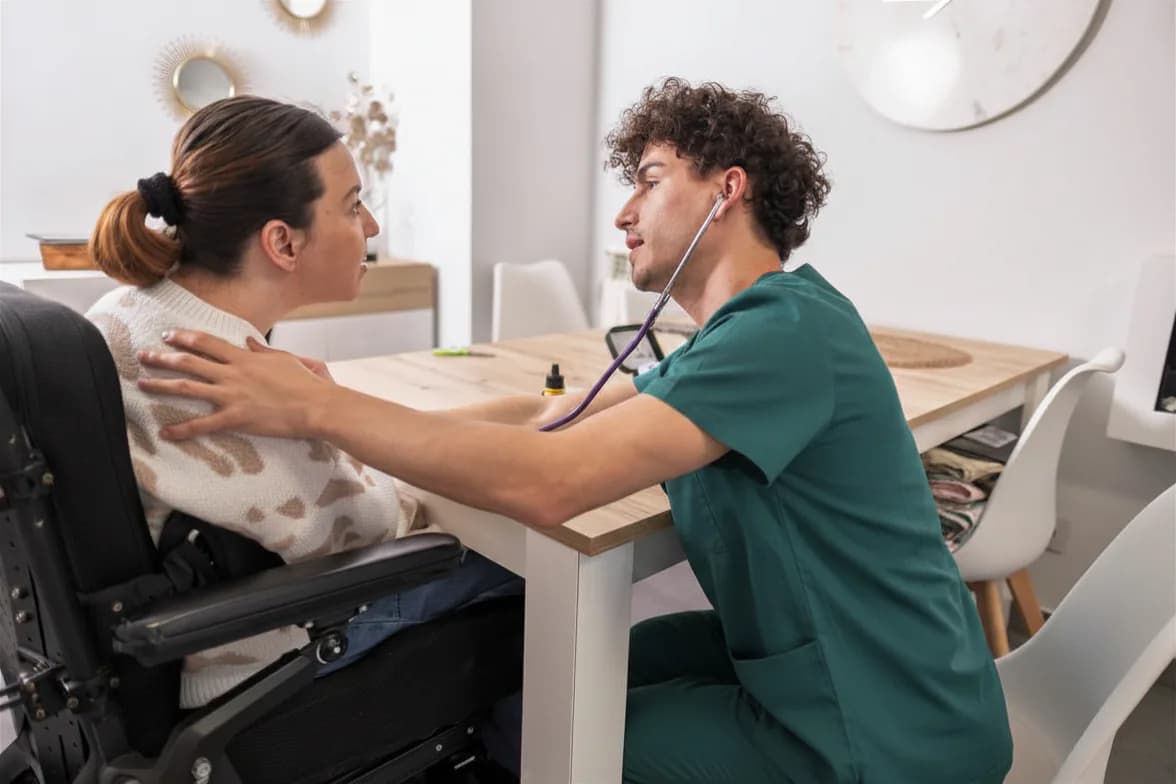
Private Duty Nursing
Dedicated One-on-One Nursing Care at Home
CarePine Private Duty Nursing provides one-on-one skilled nursing care for patients with complex, chronic, or high-acuity medical needs who require extended or continuous support at home.
What Is Private Duty Nursing?
Private duty nursing delivers skilled, one-on-one nursing care in the home for patients who need extended monitoring, complex treatments, or continuous support that intermittent visits cannot safely provide.
This service is commonly used for technology-dependent care, high-acuity medical needs, and situations where trained nursing presence reduces complications and supports family confidence.
CarePine private duty nurses combine clinical precision with calm, family-centered communication so complex care feels manageable at home.

Private Duty Nursing Services
Care plans are individualized to physician orders, nursing scope, and the equipment and supports required for safe care in the residence.
Registered or licensed practical nurses provide extended shifts of skilled care including assessments, treatments, and detailed documentation aligned with physician orders.
Ongoing clinical assessment
Nurses monitor vitals, lines, airways, and neurologic status to detect changes early and communicate with the medical team.
Learn MoreCare coordination
Shift notes, handoffs, and family updates keep everyone aligned on medications, equipment issues, and scheduled appointments.
Learn MoreNeurologic and seizure precautions
For eligible patients, nursing support includes observation, safety positioning, and response planning per physician guidance.
Learn MoreSymptom support alongside curative care
Comfort-focused nursing strategies can complement medical treatment plans to reduce distressing symptoms when ordered.
Learn MoreShift length and staffing depend on acuity, payer requirements, and state regulations governing private duty nursing.
Nurses experienced in airway management provide tracheostomy care, suctioning, and ventilator monitoring according to strict protocols and training requirements.
Tracheostomy site care
Care includes dressing changes, stoma cleaning, and monitoring for infection, granulation tissue, or cuff-related issues per protocol.
Learn MoreAirway suctioning
Sterile and clean suction techniques help maintain patency and reduce retained secretions that increase respiratory distress risk.
Learn MoreVentilator monitoring and alarms
Nurses watch waveforms, alarms, oxygenation, and power contingencies while teaching families what to report immediately.
Learn MoreEmergency readiness planning
Backup equipment checks, bag-valve training for caregivers, and clear escalation pathways support safer high-acuity care at home.
Learn MoreVentilator and tracheostomy care requires specialized competency verification and emergency preparedness in the home.
Nursing support for infusion lines, medication administration per order, and enteral feeding systems helps patients maintain nutrition and therapy safely outside the hospital.
Central and peripheral line care
Dressing changes, flushing, and sterile technique reduce bloodstream infection risk and keep access devices functional.
Learn MoreInfusion monitoring
Nurses observe for infusion reactions, document intake, and ensure pumps and tubing are programmed correctly when applicable.
Learn MoreG-tube and enteral feeding support
Care includes site assessment, feeding delivery per protocol, residual checks when ordered, and education on clog prevention.
Learn MoreNutrition and hydration oversight
Nursing documentation supports dietitian and physician adjustments by tracking tolerance, output, and weight trends.
Learn MoreInfusion and feeding protocols must match physician orders, pharmacy instructions, and agency competency policies.
For patients with multisystem needs, nurses integrate wound care, medication administration, seizure precautions, and other ordered interventions into a cohesive shift plan.
Complex wound support
Frequent assessments and dressing changes align with wound clinic recommendations to promote healing and prevent deterioration.
Learn MoreMedication administration per order
Nurses administer ordered medications and monitor effects, interactions, and side effects across long shifts.
Learn MoreSpinal cord injury and TBI support
Care may include bowel and bladder programs, autonomic dysreflexia awareness, positioning, and therapy carryover per team guidance.
Learn MoreFamily training for transitions
Skill teaching helps caregivers understand warning signs, equipment basics, and when to call the nurse or 911.
Learn MoreComplex care requires clear physician orders, adequate supplies, and a home environment that supports safe treatment delivery.
Ready to Get Started?
Whether you’re a patient, caregiver, or referring provider—our team is here to answer your questions and coordinate care that fits your needs.
Conditions and Situations We Often Support
Private duty nursing may be appropriate for patients with needs such as:
Eligibility depends on physician orders, payer authorization, home suitability, and staffing availability for the required skill set.
Who Benefits from Private Duty Nursing?
This level of care may be right when:
CarePine can help families understand authorization steps, documentation needs, and realistic staffing options for complex cases.
Why Families Choose CarePine Private Duty Nursing
One-on-one clinical attention
A dedicated nurse focuses entirely on your loved one’s safety, comfort, and ordered treatments during each shift.
High-acuity experience
Our team emphasizes competency verification for ventilator, tracheostomy, infusion, and complex medical needs.
Hospital-to-home continuity
Detailed handoffs and teaching help families bridge the gap between inpatient intensity and home reality.
Transparent communication
Families receive clear updates about changes in condition, equipment concerns, and recommended follow-up with physicians.
Respect for home life
We work around household routines while maintaining the clinical standards required for safe care.
Our Approach to Private Duty Nursing
Private duty nursing is not only about tasks—it is about creating a stable, predictable environment where complex care can succeed outside the hospital.
We emphasize meticulous protocols, calm escalation practices, and partnership with families so the home remains a viable care setting.
When minutes matter, skilled nursing presence can be the difference between stability and crisis—delivered with professionalism and compassion.
Frequently Asked Questions
Home health is typically intermittent skilled visits for recovery goals. Private duty nursing provides longer shifts of one-on-one nursing for patients who need continuous or extended skilled support.
Coverage varies by payer, diagnosis, and medical necessity documentation. Our team can help families understand common requirements and next questions to ask their insurer.
Yes, when authorized and available, overnight nursing can support sleep-safe monitoring, tracheostomy care, and other ordered interventions that cannot pause until morning.
Equipment needs depend on the plan of care and may include ventilators, suction, feeding pumps, backup power plans, and adequate storage for supplies.
We review infection prevention, space for supplies, pet safety, smoking policies, and emergency egress so the home can support high-acuity care safely.
Discuss Private Duty Nursing with CarePine
If your loved one needs extended skilled nursing at home, we can help you explore whether private duty nursing is appropriate and how to get started.