
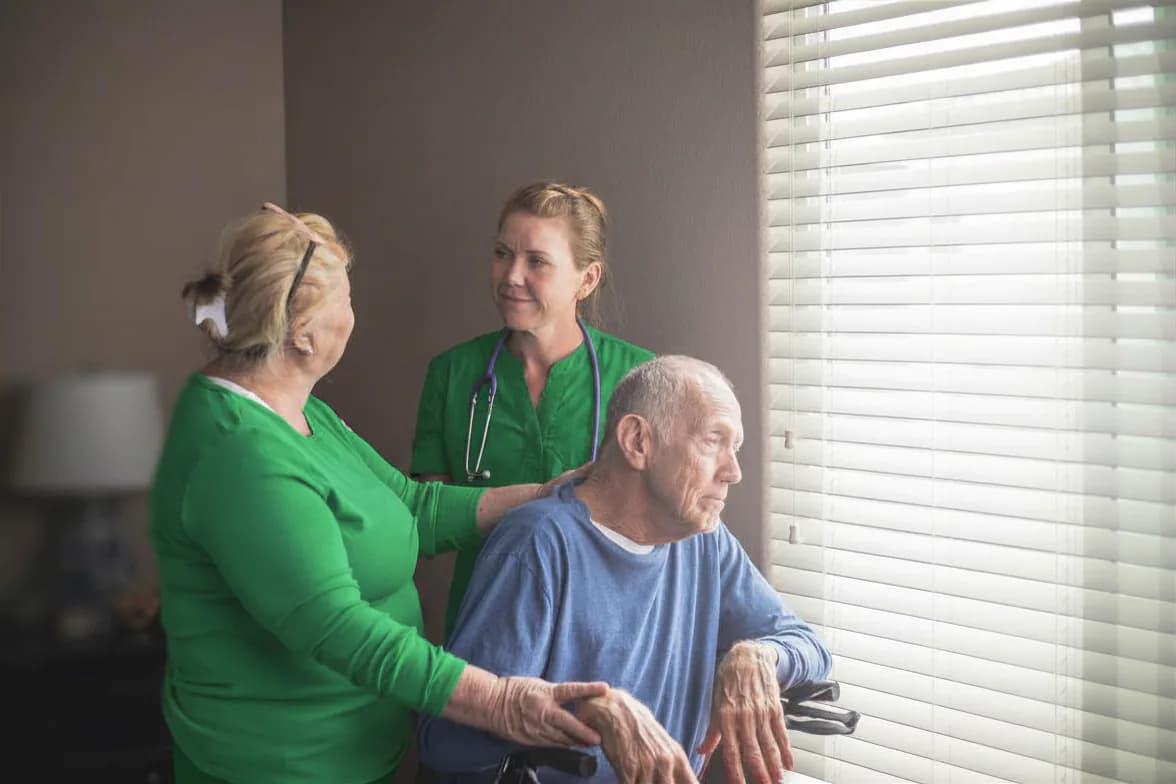
Medical Social Services
Psychosocial Support for Patients and Families
CarePine Medical Social Services provide counseling, community resource coordination, advance care planning, and family support to address the emotional and practical challenges of illness and recovery.
What Are Medical Social Services?
Medical Social Services are provided by licensed or master's-level social workers who address the emotional, social, and practical barriers that can interfere with a patient's recovery and well-being. These services are part of the home health plan of care and are ordered by a physician.
Medical social workers help patients and families navigate complex healthcare systems, cope with diagnosis-related stress, access community resources, plan for the future, and strengthen the support systems that make safe, effective home care possible.
At CarePine, we know that healing involves more than clinical treatment — it requires attention to the whole person and the family who supports them.

Our Medical Social Services
Our social workers collaborate with nurses, therapists, and physicians to ensure patients receive holistic support throughout recovery.
Licensed social workers provide short-term counseling to help patients and families cope with the emotional impact of illness, injury, loss, or major life changes.
Adjustment and coping counseling
Social workers help patients process grief, anxiety, and frustration related to changes in health, function, or independence.
Learn MoreDepression and anxiety screening
Validated screening tools identify patients who may benefit from additional mental health support or medication evaluation.
Learn MoreGrief and loss support
Compassionate guidance helps patients and families navigate anticipatory grief, bereavement, and the emotional weight of chronic illness.
Learn MoreStress management strategies
Practical techniques for managing health-related stress support better sleep, appetite, and engagement with the care plan.
Learn MoreCounseling within home health is focused on adjustment and coping related to the medical condition. Patients needing ongoing mental health treatment are referred to appropriate providers.
Social workers connect patients and families with local, state, and federal resources that can ease financial, logistical, and practical burdens during recovery.
Financial assistance programs
Social workers identify assistance programs for medications, equipment, utilities, and other expenses that illness can make difficult to manage.
Learn MoreTransportation and access services
Referrals to transportation programs help patients attend medical appointments, pharmacy visits, and other essential outings.
Learn MoreSupport group referrals
Connection to peer support groups for specific conditions or caregiving roles provides community and shared experience beyond clinical care.
Learn MoreResource availability varies by location. The social worker researches current options and helps patients apply when appropriate.
Social workers facilitate conversations about goals of care, advance directives, and healthcare decision-making to ensure patient preferences are documented and honored.
Goals of care discussions
Guided conversations help patients clarify what matters most to them and communicate those priorities to their care team and family.
Learn MoreAdvance directive assistance
Social workers explain advance directive documents and help patients complete them so their wishes are on record if they cannot speak for themselves.
Learn MoreHealthcare proxy designation
Education about appointing a healthcare agent ensures someone trusted can make medical decisions if the patient becomes unable to do so.
Learn MoreAdvance care planning is voluntary and patient-directed. Social workers provide education and support but do not provide legal advice.
Social workers help patients and families plan for ongoing care needs, transitions between care settings, and future living arrangements.
Discharge and transition planning
Coordination with the care team ensures smooth transitions from home health to outpatient, facility-based, or community care when appropriate.
Learn MoreCare level assessment
Social workers evaluate whether current support meets the patient's needs or whether additional services would improve safety and outcomes.
Learn MoreLiving arrangement guidance
Families receive objective information about assisted living, nursing facilities, and in-home support options to make informed decisions.
Learn MoreLong-term planning recommendations are based on clinical assessment and the patient's expressed preferences for future care.
Social workers provide education, emotional support, and practical guidance to family caregivers who play a central role in the patient's recovery and daily care.
Caregiver education and training
Social workers help families understand the patient's condition, what to expect, and how to provide safe support at home.
Learn MoreCaregiver burnout prevention
Assessment of caregiver stress and connection to respite resources help prevent the exhaustion that can compromise both caregiver and patient well-being.
Learn MoreFamily communication support
Facilitated conversations help families navigate disagreements, role changes, and decision-making challenges that arise during illness and recovery.
Learn MoreSafety and vulnerability assessment
Social workers screen for signs of abuse, neglect, or exploitation and take appropriate steps to protect vulnerable patients.
Learn MoreFamily support is integrated into the plan of care and coordinated with nursing and therapy to ensure consistent messaging and realistic expectations.
Ready to Get Started?
Whether you’re a patient, caregiver, or referring provider—our team is here to answer your questions and coordinate care that fits your needs.
Situations Where Medical Social Services Help
Medical social services may be beneficial for patients and families experiencing:
Medical social services are part of the home health benefit and require a physician order. Your care team can request a social work evaluation when psychosocial needs are identified.
Who Benefits from Medical Social Services?
Medical social services may be appropriate for patients who:
Social workers are integrated members of the CarePine care team and work closely with nurses, therapists, and physicians to address the whole patient.
Why Families Value CarePine Medical Social Services
Whole-person focus
We address the emotional, social, and practical dimensions of care — not just the clinical condition.
Expert resource navigation
Our social workers maintain current knowledge of community, state, and federal resources available to patients and families.
Compassionate communication
Difficult conversations about goals of care, end-of-life preferences, and family dynamics are handled with sensitivity and respect.
Integrated care team
Social workers collaborate daily with nurses and therapists so psychosocial needs are not treated in isolation from clinical care.
Advocacy for the vulnerable
We stand alongside patients who face systemic barriers, safety concerns, or gaps in the support they need to recover at home.
Our Approach to Medical Social Work
We begin by listening. Every patient and family has a unique set of circumstances, and effective social work starts with understanding what matters most to them — their fears, their goals, and the resources they already have.
From that foundation, we build a practical plan: connecting families to resources, supporting emotional coping, facilitating care conversations, and advocating for the services that will make the biggest difference.
Our social workers do not just solve problems — they empower families to navigate what comes next with confidence and clarity.
Frequently Asked Questions
They address psychosocial barriers to recovery by providing counseling, connecting patients to community resources, facilitating advance care planning, and supporting family caregivers.
Yes. Medical social services are a covered home health benefit under Medicare and most insurance plans when ordered by a physician as part of the plan of care.
Social workers help identify assistance programs and navigate insurance benefits. They are not financial advisors but can connect patients with appropriate resources.
Visit frequency depends on the patient's needs. Some situations require only one or two visits; others benefit from ongoing support throughout the home health episode.
Yes. Social workers are trained in mediation and communication facilitation and can help families work through disagreements about care decisions and responsibilities.
Connect with CarePine Social Services
If you or a family member could benefit from psychosocial support during home health care, our team is here to listen and help.